DIWAN · REGISTER
Reading the register.
Reading the register.
Intelligence with context. Foresight that shapes decisions. The DIWAN register publishes commissioned studies, briefings, and market intelligence across sectors and jurisdictions.
 United Arab Emirates 23
 Saudi Arabia 19
 Qatar 11
 Singapore 9
 Oman 4
 Zimbabwe 3
 Bahrain 2
 Bangladesh 2
 Burundi 2
 China 2
 Dominican Republic 2
 Egypt 2
 Ethiopia 2
 France 2
 Germany 2
 Guinea 2
 Israel 2
 Kazakhstan 2
 Liberia 2
 Malaysia 2
 Mexico 2
 Netherlands 2
 Pakistan 2
 Papua New Guinea 2
 Switzerland 2
 Tanzania 2
 Turkmenistan 2
 Uganda 2
 Zambia 2
 Albania 1
 Algeria 1
 American Samoa 1
 Andorra 1
 Angola 1
 Antigua and Barbuda 1
 Argentina 1
 Aruba 1
 Australia 1
 Austria 1
 Azerbaijan 1
 Bahamas, The 1
 Barbados 1
 Belarus 1
 Belize 1
 Benin 1
 Bermuda 1
 Bhutan 1
 Bolivia 1
 Bosnia and Herzegovina 1
 Brazil 1
 British Virgin Islands 1
 Brunei Darussalam 1
 Bulgaria 1
 Burkina Faso 1
 Cabo Verde 1
 Cambodia 1
 Canada 1
 Cayman Islands 1
 Central African Republic 1
 Chad 1
 Channel Islands 1
 Chile 1
 Congo, Dem. Rep. 1
 Congo, Rep. 1
 Costa Rica 1
 Cote d'Ivoire 1
 Croatia 1
 Cuba 1
 Curacao 1
 Cyprus 1
 Czechia 1
 Denmark 1
 Djibouti 1
 Dominica 1
 Ecuador 1
 Equatorial Guinea 1
 Eritrea 1
 Estonia 1
 Eswatini 1
 Fiji 1
 Finland 1
 French Polynesia 1
 Gabon 1
 Gambia, The 1
 Georgia 1
 Gibraltar 1
 Greece 1
 Greenland 1
 Grenada 1
 Guam 1
 Guatemala 1
 Guinea-Bissau 1
 Guyana 1
 Haiti 1
 Hong Kong SAR, China 1
 Hungary 1
 India 1
 Indonesia 1
 Iran, Islamic Rep. 1
 Ireland 1
 Isle of Man 1
 Italy 1
 Jamaica 1
 Jordan 1
 Kiribati 1
 Korea, Dem. People's Rep. 1
 Korea, Rep. 1
 Kosovo 1
 Kuwait 1
 Kyrgyz Republic 1
 Lao PDR 1
 Latvia 1
 Lesotho 1
 Libya 1
 Lithuania 1
 Luxembourg 1
 Macao SAR, China 1
 Malawi 1
 Maldives 1
 Malta 1
 Marshall Islands 1
 Mauritania 1
 Mauritius 1
 Micronesia, Fed. Sts. 1
 Monaco 1
 Mongolia 1
 Montenegro 1
 Morocco 1
 Mozambique 1
 Myanmar 1
 Naoero 1
 Nepal 1
 New Caledonia 1
 New Zealand 1
 Niger 1
 Nigeria 1
 North Macedonia 1
 Northern Mariana Islands 1
 Palau 1
 Panama 1
 Paraguay 1
 Peru 1
 Philippines 1
 Poland 1
 Puerto Rico (US) 1
 Romania 1
 Rwanda 1
 Samoa 1
 San Marino 1
 Sao Tome and Principe 1
 Senegal 1
 Seychelles 1
 Sierra Leone 1
 Sint Maarten (Dutch part) 1
 Slovak Republic 1
 Slovenia 1
 Solomon Islands 1
 South Africa 1
 South Sudan 1
 Spain 1
 Sri Lanka 1
 St. Kitts and Nevis 1
 St. Lucia 1
 St. Martin (French part) 1
 St. Vincent and the Grenadines 1
 Sudan 1
 Suriname 1
 Sweden 1
 Syrian Arab Republic 1
 Tajikistan 1
 Timor-Leste 1
 Togo 1
 Tonga 1
 Trinidad and Tobago 1
 Tunisia 1
 Turkey 1
 Turks and Caicos Islands 1
 Tuvalu 1
 Ukraine 1
 United Kingdom 1
 Uruguay 1
 Uzbekistan 1
 Vanuatu 1
 Venezuela, RB 1
 Vietnam 1
 Virgin Islands (U.S.) 1
 West Bank and Gaza 1
 Yemen, Rep. 1

Tonga imports roughly 36 times more than it exports, food makes up about 30% of its merchandise import bill, and half of its farmland lies fallow. The opening is a small, cyclone-hardened aggregation, cold-chain and processing hub on Tongatapu that turns surplus root crops, fish and horticulture into products that displace frozen imports, financed with grants and equity rather than new sovereign debt.
Tonga (population about 104,000) has fertile land, a farming culture in which most households grow food, and established export niches in root crops and kava. Yet its merchandise trade is profoundly lopsided: in the first quarter of 2026 the kingdom imported T$190.8 million of goods and exported T$5.3 million. Food accounts for about 29.9% of merchandise imports, imported fatty meats have been linked to some of the world's highest obesity rates, and the 2015 agricultural census found half of agricultural land fallow and about 95% of farming households subsistence or semi-subsistence. The binding constraints are not soil or skills but aggregation, cold chain, food-safety certification, labour lost to emigration and seasonal work abroad, disaster exposure and a land system that allows leases but never sales. This study sizes the import-substitution prize (around US$4 million to US$18 million a year at 5% to 20% displacement of an indicative US$88 million food import bill), sets out a phased hub-and-outgrower model, maps the legal route (Foreign Investment Act 2020, Cabinet-consented leases, the 2023 UAE-Tonga investment agreement) and explains where Gulf food-security capital fits: as catalytic grant, equity and co-financing alongside programmes already in the field, not as a sovereign lender and not as a staple-supply base for the Gulf.

AML rebuilt, permits enforced, mergers gated, quotas due: what changed in AE-FED and what operators must do before year-end
The UAE's federal rulebook has shifted from writing rules to enforcing them. This edition of the AE-FED regulatory watch covers four fronts that moved since our last issue: the wholesale AML rebuild under Federal Decree-Law No. 10 of 2025 (AED 100m fines, personal senior-management liability, a lower evidence bar, FATF evaluation year); the Advertiser Permit and SCA finfluencer regimes crossing into enforcement; the Competition Law's 2026 Executive Regulations making merger filing a suspensory stage-gate with a deemed-rejection default; and Emiratisation's 31 December 2026 checkpoint. With a dated 90-day radar and a five-move operator playbook.

Evaluating Economic, Social, and Environmental Dynamics
The United Arab Emirates is expected to maintain a robust economic profile, with a projected GDP of USD 552.3 billion in 2024 and a real GDP growth rate of 4%. The population is forecasted to reach 11.5 million by 2025, driven by a growth rate of 4.7%. Additionally, the country will continue to exhibit high urbanisation and connectivity levels, supporting its status as a regional hub for trade and technology.
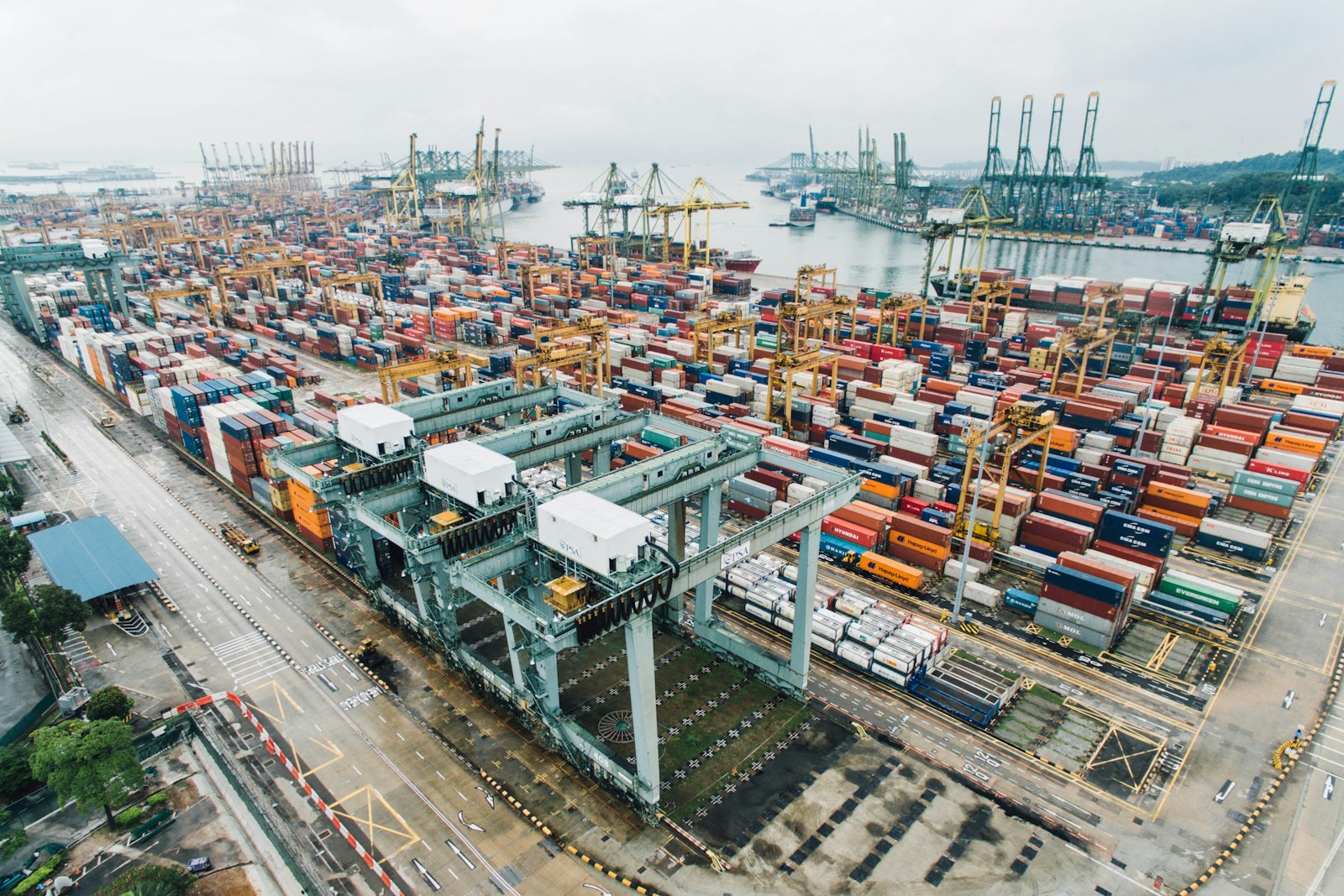
Second reading of the Ask-desk demand signal: the full map of GCC dispute forums in 2026 — courts, common-law enclaves and arbitral institutions — what each costs, how each enforces, and how to choose before you sign
The first reading of this demand signal mapped what readers of a GCC legal platform actually ask. This second reading builds out the cluster that was answered most thinly — dispute triage — into the study it deserves. In 2026 the Gulf runs three parallel dispute systems side by side: onshore civil-law courts, offshore common-law courts (DIFC, ADGM), and a maturing bench of arbitral institutions (DIAC, arbitrateAD, SCCA). The gap between choosing well and choosing badly no longer shows up at the hearing — it shows up at enforcement. This study maps the forums, prices the routes, tests the enforcement rails against nine years of annulment data, and closes with a drafting playbook: the decision framework and the five clause defects that still sink otherwise sound contracts.

Announced gigawatts, energized megawatts, and who actually captures the AI workloads
The Gulf has announced between 5 and 11 gigawatts of sovereign AI data-centre capacity while roughly 500 megawatts of third-party capacity is live today. This study benchmarks the UAE, Saudi Arabia and Qatar against the two constrained incumbents — Singapore and Ireland — across capacity, power economics, latency position and regulation, and maps who captures which workloads to 2030.

Where sovereign capital is pulling private money — UAE, Saudi Arabia and Qatar benchmarked against the Netherlands and Israel, and the four-segment stack priced
Gulf food-security capital has moved upstream: over US$7 billion of verified sovereign and state-linked deals since 2020 now target the grain trade itself, while domestic production consolidates around what survives the desert P&L. This study benchmarks the UAE, Saudi Arabia and Qatar against their two explicit reference systems — the Netherlands and Israel — then prices the four-segment investable stack: greenhouse-first controlled-environment agriculture, sovereign-anchored aquaculture, cash-yielding cold chain, and alternative proteins as a regulatory call option under Abu Dhabi's 2025 halal-integrated novel-food framework. It closes with the four co-investment structures that repeat across every disclosed transaction, and a candid risk register.

Announcement versus deployment across the UAE, Saudi Arabia and Qatar — benchmarked against Singapore and France
The Gulf sovereign-AI race has split into three distinct strategies: the UAE is deploying (a gigawatt-class campus physically under construction, chips export-licensed, a US$49bn infrastructure fund closed, and a continuous cadence of shipped models), Saudi Arabia is announcing at the largest scale (6.6GW by 2034) while execution is still early, and Qatar has pivoted to capital-as-strategy, buying exposure rather than building gigawatts. Benchmarked against Singapore and France, the UAE currently leads on execution score; the binding constraint for every programme is US chip-export approval, which has quietly become the real scoreboard.

Contract automation and Arabic legal AI are scaling fast, but a 40-plus-free-zone map and two common-law islands keep localization the hard problem
GCC legal technology is moving from pilots to working infrastructure across contract automation and Arabic-language legal AI, with government itself now a builder as well as a regulator. Funding is pre-seed-weighted against a single better-capitalised entrant, and jurisdictional fragmentation across 40-plus free zones plus the DIFC and ADGM common-law islands remains the region's defining localization cost, one that Singapore, the UK and the US do not face in the same form.

Electronic bills of lading, the MLETR statute race and whether Dubai can take documentation share from Geneva, Singapore and London
Gulf economies already route $1.6tn of merchandise trade, yet the documents that carry title, credit and jurisdiction still clear through incumbent hubs and English law. This study benchmarks Dubai against Geneva, Singapore and London on legal enablement, firm concentration and registry depth. It finds the window to capture documentation share open until roughly 2030 — contingent on one missing federal statute rather than on technology.

Compute, equity and chip diplomacy: an audit of what Abu Dhabi, Riyadh and Doha are actually acquiring in the artificial-intelligence build-out
Between Microsoft's $1.5bn stake in G42 in April 2024 and the $49bn close of Abu Dhabi's MGX fund in July 2026, Gulf sovereign capital moved from the periphery of artificial intelligence to a load-bearing position in its financing. This study benchmarks the Gulf's sovereign AI vehicles against their Singaporean peers and finds that what the sovereigns are buying, in descending order of certainty, is compute, equity and influence — with access to American chips, not capital, as the binding constraint.

Formation venues compete on price and speed; the durable cost of owning a UAE company now sits in the tax-and-filing stack that follows
The UAE remains one of the cheapest and fastest places in the Gulf to incorporate, with entry licenses from roughly AED 6,000 and approval in days. Since corporate tax took effect in June 2023, however, the recurring compliance line — registration, bookkeeping, VAT and corporate tax filings — has become broadly venue-independent and often exceeds the annual license renewal itself. This study benchmarks five formation venues against Saudi and Bahraini references and sizes the services market that keeps the country's ~557,000 SMEs clean.

Uganda's power problem has moved from generation to delivery. Installed capacity reached about 2,048 MW in 2024 against a 2025 system peak of about 1,351 MW, but 44.7% of people still lack access, losses run near 17% and manufacturers report frequent outages. The 2030 National Energy Compact targets 85% access, US$17.7 billion of investment (US$9.4 billion private) and 2,712 mini-grids from a base
Read this studyPhoto: Kia Sheikhy
